Traffic Light Optimization with SUMO
A university graduation project using SUMO (Simulation of Urban Mobility) to optimize traffic light timing for emergency vehicles.
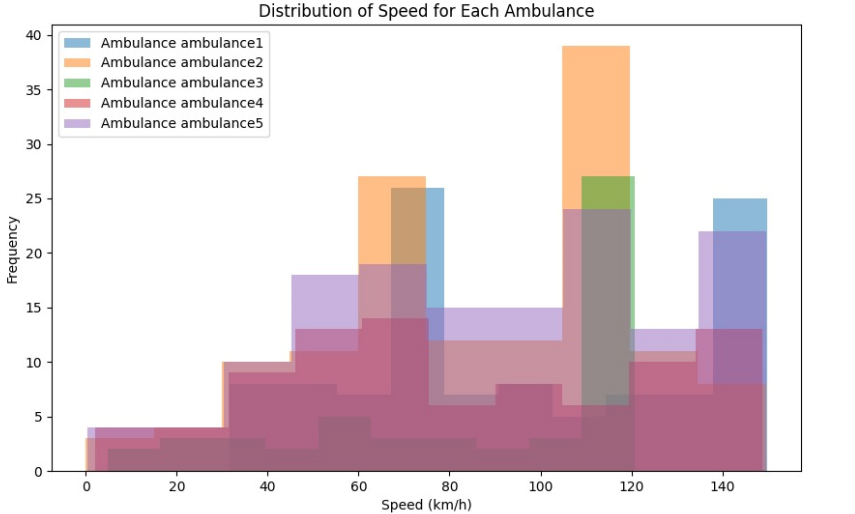
Emergency vehicles lose time at traffic signals
Ambulance response time is directly affected by how traffic signals are timed along its route — every red light adds delay that can matter in an emergency. Together with a research collaborator, we looked at whether traffic signal timing could be optimized specifically to reduce ambulance travel time, rather than optimizing for general traffic flow alone.
Shortest-path-aware signal control in SUMO
We used SUMO (Simulation of Urban Mobility) to model an urban road network and simulate emergency vehicle routing. The core idea was shortest-path-aware signal control: adjusting traffic light timing along an ambulance's route based on its shortest path to the destination, rather than treating every intersection identically.
- Built and ran traffic simulations in SUMO
- Modeled shortest-path-aware signal timing for emergency vehicle routes
- Compared ambulance travel time against standard, non-optimized signal timing
What we used
SUMO (Simulation of Urban Mobility) for traffic simulation, with signal control logic built around shortest-path routing for emergency vehicles.
Reduced simulated ambulance travel time
The shortest-path-aware signal control approach reduced simulated ambulance travel time compared to standard signal timing, supporting the case for emergency-vehicle-aware traffic control in real-world systems.
- Demonstrated reduced ambulance travel time in simulation versus standard signal timing
- Research collaboration combining traffic simulation and signal control logic
Have a similar problem to solve?
Tell us what's slowing your team down. We'll help you figure out what's actually worth building.